Friday, May 5, 2023

Blog Post #10- EOTO (All About Net Neutrality)

 The internet has become a second world, next to our physical one. It's something that more than half the world has access to and it connects each and every one of us in an instant. The internet was the start of a new era of communication and technology; it completely flipped our world upside down, but in a good way. However, it was not a surprise when governments and companies began to place limitations on our internet access. Whether it be violations of our online privacy, restrictions on how and what we can access on the internet, or unfair discrimination online, these limitations should not exist. It completely ruins the experience of the internet for majority of people and discriminates against a certain population of our country. This is what net neutrality was meant to solve. 

You're probably wondering what Net Neutrality is; to put it simply, net neutrality is similar to an equality law for internet access. A more textbook definition is the following: The principle that ISP (internet service providers) should give equal access to content, applications, data speeds, and more without any bias towards specific websites or groups of people. Internet service providers control our internet access more than we know. They can see everything you access, control internet speeds, and prioritize data depending on status (for example, a corporation or business can pay more money to gain better overall access to the internet). This is exactly what Net Neutrality is aiming to fix.

Some people hear about Net Neutrality and feel like it doesn't quite matter to them or won't affect them. This could not be more false. Net Neutrality is something that everyone should be advocating for; without it, the way we experience and interact with the internet could be changed completely. As of right now, there are no Net Neutrality laws in place, but internet service providers claim to honor the principles of Net Neutrality. This is a good thing, but it is bound by a simple honor system. There is no way for us to know what these ISP's are actually doing behind the scenes and there are no laws to stop them from doing anything malicious. Without these policies, there would be unequal internet access for everyone. It is not unequal to only a specific race or class but basically anybody that cannot afford to dump money into the service providers pockets. 

When discussing an issue like unequal internet access, it can seem confusing and foreign which is not unexpected. The internet is fairly new and it may be hard to understand how there could be unequal access to something that we can currently retrieve in less than 10 seconds. This is why it is important to know about Net Neutrality and why we should be fighting for it. Currently, our internet access and protection is at risk, yet majority of users online don't seem to be worried. Our data could be analyzed, our speeds throttled down, and our website access restricted; for all we know, it's probably happening already. 

Wednesday, May 3, 2023

Final Post- My Relationship With Technology

 Most of the world interacts with some form of technology every single day. It has become a consistent part of our everyday life, so naturally we have grown to have a kind of relationship with it. For most of us, it seems to be more of an attachment, not necessarily to the specific devices or inventions themselves but to the comfort and advancement that technology gives us. This kind of relationship can appear in different ways which we can only really discern by analyzing our own personal relationships with technology. 

I've started analyzing my own relationship with technology more closely once I started this blog. The research I've done while writing each post has really opened my eyes to seeing my relationship with more clarity. While it is isn't the healthiest in the world, my time with technology has become more utilized. I use it more for class assignments or project research rather than basic entertainment or a mindless waste of time. As time passes and technology becomes more and more normalized, I feel as though society has become nose blind to the obvious issues that come with advanced technology such as misinformation and improper privacy online. 

The 'online footprint' is one of the most important aspects of each individual's presence online. Over the past year or so, (especially going into college) I have been much more conscious about my online footprint. I deleted multiple social media apps, stopped posting controversial or sensitive media on my existing ones, and made everything private. My stepfather has worked in cybersecurity for multiple years, so online safety and privacy has always been taught in my house. This is why I found it quite hilarious when I searched my own name online and nothing popped up, but you could find both of my parents on Google. 


Over the pandemic in 2020, people's online presence increased tenfold. With the surge of popularity in apps such as TikTok, more and more people were creating public social media accounts. The impact of an online footprint is very real, as a quick search will show the results of improper behaviors online. 

We've come to a point where we need to analyze our relationship with technology on a societal level as well. It's not just the small computer we hold in our hands everyday but the technology that runs our world behind the scenes. Our agriculture systems, public transit, motor vehicle technology, communication services, and more are all being affected by new technological developments and it seems to be in a positive way. However, we must consider how far we should let technology go; we have gotten to the point where everybody can have their own personal AI on their Snapchat accounts. This is a crazy development: public access to AI technology is one of the hugest things to happen in the last decade or so. The issue comes not with just the tech; the issue arises with how open we are to receiving something so new and unknown. We have no idea the security concerns that could arise with the use of AI technology, especially if security issues with regular social media apps have not been solved. 

With all of this said, my own personal relationship with technology has been a slow growth with many changes over the years. As someone who plans to go into the field of technology, I am always amazed by new inventions and developments. However, I still have my own boundaries set with how I interact with new technology. My overall rule is that I try not to be an early adapter of anything and I will never support technology that advances us at the cost of something else (like our agriculture tech). Even though I set this distance between myself and technology, I still think that it is something beautiful for us to develop and that the possibilities of development are endless. 

Thursday, April 27, 2023

Blog Post #9- Looking at Cassette Tapes Through a Lens of Diffusion

 The lens of diffusion theory is a theory that attempts to explain the rate at which new ideas and technologies spread. It is a very detailed theory that can be applied to a lot of new technologies or ideas such as the development of Facebook or even abolitionism. Since we previously discussed the history of cassette tapes, I thought it would be a good idea to delve a bit further into that impactful technology and examine how it spread through this lens of diffusion. 

There are a few different names for each part of the curve that we can use to determine at what stage of life the technology was at and why the people using it were using it. Cassette tapes had a very important 'experimental' stage. This is the beginning of the curve, when the technology just begins to come out and is still being developed or improved majorly. At this point, the only people interacting with these new cassette tapes were the ones inventing it (pioneers) or the ones highly interested in obtaining the technology. This would be people at recording companies or the people that were behind making the cassette tape. These people caught on because of how innovative the technology was; it was going to change the entire way we work with audio recordings. 
Next came the early adapters and early majority. These were the people that caught interest in the technology fairly early on. The early adapters discovered how convenient it was to use these cassette tapes and the possibilities that came with them, such as recording music and having portable access to it. This influenced the early majority, which was the start of the boom of the cassette tape. There were really no downsides to using this new technology. Its possibilities for new audio technology were near in sight, especially when the Sony Walkman released. When considering the late majority and laggards, those people were simply those that did not have an immediate need for the technology or were doubtful. 

Blog Post #7- Age of AI

 After watching the video about the Age of AI, I had a lot of different thoughts about it. Learning about technology is always interesting, but it becomes a little scary when that technology could be replacing you. There were a few different shocks in this video about the effects of AI, even outside of taking jobs. AI affects things like inequality in our workplaces and our very own economy. 


The use of AI by companies provides more efficiency; what is efficiency when it comes to businesses and companies? Less workers and more money. AI provides this exactly, which means they have no real reason to keep the workers that can be easily replaced by this new technology. However, do not let this sway you completely. There are quite a few positive things to gain from this AI technology; for example, a lot of these algorithms and AI technology are made to improve for you. This means it is always trying to get better and tailor things better towards you. 
One of the more concerning things regarding AI technology, is how it affects our privacy. AI softwares such as ChatGPT are meant to be human in nature. For example, the social media app, Snapchat, has released a new feature called 'My AI' where users are able to chat with their own personal AI bot. The concerning part is that for this technology to have been made, our data and behavior online must have been analyzed. There is also a concern about our privacy and businesses. Businesses that use this new AI technology want to know what we are doing now, soon, and later. Analyzing our activity online will tell them everything they want to know about us. At the end of the day, it is up to each individual to decide if AI is a good or bad thing; it depends on how much you want to gain and how much you are willing to give up. 

Monday, April 24, 2023

Blog Post #8- The Internet and World Wide Web (Reaction Post)


We use the internet and world wide web everyday. I use both every time I write and publish a blog. I recently learned about its history and how it was developed. The growth of the internet has happened extremely fast; in under a century, it has been integrated into our everyday life so much that if it were to stop working, it would collapse a lot of things all over the world. There are a lot of pros and cons that come with the using the internet, but overall it seems to have done a lot of good for advancing society. 

The first version of this revolutionary creation was made in 1969, called ARAPNET (Advanced Research Projects Agency Network). It was mainly used for academic and research purposes but lasted until the late 80s. ARAPNET was nothing like the internet we know and love today. It was two computers sending data to each other over a local network. As simple as that seems, it was the foundation for building the internet that exists today. This first version of the internet was more basic than what we see today. 
When the world wide web was first introduced to the public, it was used for some very basic tasks. 
These included rapid communication, the first electronic news sources, stock market trading, and some small entertainment. For example, this is when email was first being used and when we could watch Youtube videos for the first time. It may all seem a little weird that the internet was limited to such small things (which were revolutionary at the time) when it has expanded to something much more today. The world wide web has expanded and become its own living ecosystem of online activity. Online social media has taken the world by storm; there is much more independent news and journalism because of how easy it is to publish things. There are also many developments of new online currencies, also known as cryptocurrencies. Although there are a ton of good things that the world wide web brought us, there have also been a fair share of bad things such as the Dark Web. 

Wednesday, April 5, 2023

Blog Post #6- AntiWar and the Progressive Era

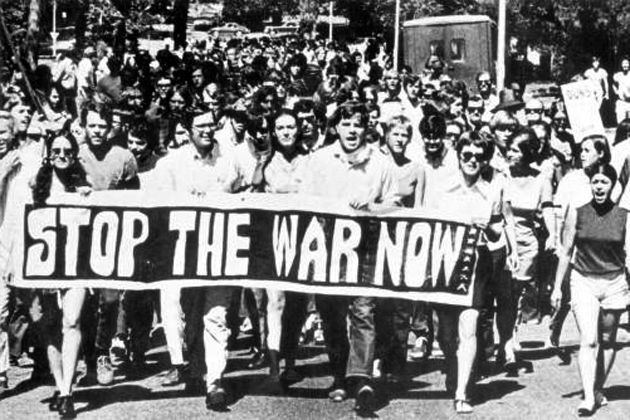
 It is no secret that the media we consume is filtered by the government and by our own interactions. Most media we receive is through our phones which track all of our data and filter the news and politics we see depending on that. However, there are things that are filtered not by our own accord. Although America is a country that allows free speech, there are some things that somehow become hidden or not 'mainstream.' One of these things seems to be any speech that is 'antiwar' or perceived as 'anti-government'. 


When looking at websites like AntiWar, you can tell that it is an obscure website that has difficulty getting traffic. For example, I bet that when you just clicked on that link just now, your browser asked if you were sure you wanted to be redirected to that website before actually sending you to it. It did for me. However, there was no reason given for why you shouldn't be redirected to the site. After looking at the website it is clear there is nothing threatening to the safety of your device, besides the blatant antiwar speech. So why are these websites so hidden in our world wide web? I personally believe it is because they contain 'unsavory' and 'unpopular' statements that heavily criticize the government and our involvement in wars. 

Is there really any surprise that these anti war websites are heavily censored? In the past, anybody that was antiwar would be jailed and severely punished. Obviously, that cannot happen today but they can still censor voices. It is even more interesting because the websites like The American Conservative are not exclusively antiwar, but are still obscure because of that occasional positioning in some articles. As a young adult in America, it is shocking to see the number of people that disagree with the media that I see everyday, also known as the mainstream media. There is so much to learn from these websites and they can help gain a new perspective on the events happening in our world today. 


Blog Post #5- EOTO (Cassette Tapes!)

 Communication technologies have evolved immensely over the past century, and even further back than that. Not every communication technology is something like a radio or the cell phone. It's important to consider all different types of this technology and their impacts. A technology that has practically been completely replaced is the cassette tape. One of the first audio recording technologies, the cassette tape, dates back to the 1960s. It completely changed the way that people record and listen to audio today, but not before going through developments of its own. 

First, we must discuss the history of the cassette tape to understand how it became what it is today. Although these tapes seem ancient compared to the technology of phones and other recording technologies, they were actually very revolutionary for audio technology. In the early 1960s, Lou Ottens worked with a team at Philips to create a tape cartridge that could record audio on it. 


The EL 1903 was the first functional model that they presented at a radio show. It was capable of recording sixty minutes of audio, thirty minutes on each side of the tape. People would try to use these models to record music and other audios, but they were not adequate enough. New versions of cassette tapes were made as the years progressed, mostly changing the materials used to make the tapes, improving output levels. Eventually, cassette tapes started being used for music and the innovations being made were a reflection of that.


Cassette tapes were sold blank; there was no audio to play back already on the tapes. This means that you could record basically anything you wanted. People would record song after song onto cassette tapes, the first version of a 'playlist'! This was an incredible advancement for audio technologies and public access to them. Not only were these tapes convenient, they were also easily accessible. Anybody could record anything onto these tapes and without the hassle of more complicated technologies. However, the appeal of being able to listen to music without having to record sixty minutes worth was too strong. 


Companies started selling pre-recorded cassette tapes, but they were still not good enough quality to compare to record players. As new improvements were made, the possibility of listening to good quality music on the go became more and more of a reality. When the Sony Walkman released, listening to music on the go became extremely popular. The sound quality had increased greatly and finding music recorded on cassette tapes was much more common. It was the first time you could listen to music and it was actually good! In my eyes, cassette tapes were the first IPods. 


These cassette tapes had a bigger impact than people give credit for. If it weren't for the innovation of the cassette tape, the way we record audio and listen to music today may be completely different or not even exist. The original invention was a way for anyone to record any audio. Each improvement brought something different, including the inventions that came for listening to these tapes such as the Sony Walkman. Although people say that cassette tapes have died and been wiped out by new audio tech, it is important to remember the roots of our listening technology. 

Blog Post #11- The Illusionary Truth Effect

The spread of information has changed drastically over the past decade or so. We rely less on the evening news and more on the quick blurb o...